

As more buyers from Mumbai and Pune invest in sea-facing NA plots along the Konkan coast, a common question comes up during site visits: does Vastu Shastra apply differently to land that faces open water? The sea is a powerful natural element in Vastu terms, and getting the orientation, shape and layout right at the plot-buying stage can save considerable cost and effort later, when it’s time to design your coastal home. Here’s a practical, buyer-friendly look at Vastu principles for sea-facing land in Konkan.
In traditional Vastu Shastra, large water bodies are associated with strong energy flow, and their direction relative to a plot is considered significant. A plot facing the sea introduces a dominant, ever-present water element that most inland plots simply don’t have. Because of this, many buyers — especially those investing in a second home or retirement property — prefer to evaluate a coastal plot’s orientation before construction planning begins, rather than trying to correct it afterward.
It’s worth noting that Vastu is a belief system many Indian home buyers factor into their decisions alongside practical considerations like soil quality, drainage and road access. This guide presents commonly followed Vastu principles for informational purposes; buyers who want a formal assessment should consult a qualified Vastu consultant for their specific plot.
Vastu principles generally favour rectangular or square plots with clearly defined boundaries over irregular, triangular or oddly angled shapes. A well-demarcated rectangular plot is not just easier to build on structurally — it is also considered more balanced from a Vastu perspective, since energy is believed to flow more evenly through regular geometric shapes than through cut corners or narrow, elongated slivers of land.
According to Vastu tradition, water bodies to the north, north-east or west of a plot are generally considered auspicious, since these directions are associated with the water element in classical Vastu texts. Since sea-facing Konkan plots often have the water body toward the west, many Vastu practitioners recommend placing the living room, veranda or open sit-out areas facing the sea, while positioning the kitchen in the south-east and the master bedroom in the south-west of the layout — the traditional zones for fire and stability elements respectively.
Main door placement is a frequently asked question for coastal homes. A north or east-facing entrance is broadly considered favourable in Vastu, and this can often be achieved on a sea-facing Konkan plot by designing the approach road and gate on the land-facing side rather than directly toward the water.
Because the sea already provides a strong, constant water presence, Vastu guidance for such plots often focuses on balance rather than adding more water features. Avoid placing additional water bodies like large ornamental ponds on the north-east corner if the sea is already close by, as this is sometimes considered an excess of the water element. Instead, buyers are often advised to reinforce the earth and fire elements in the structure — solid foundations, a well-placed kitchen, and grounded landscaping — to create equilibrium with the open water view.
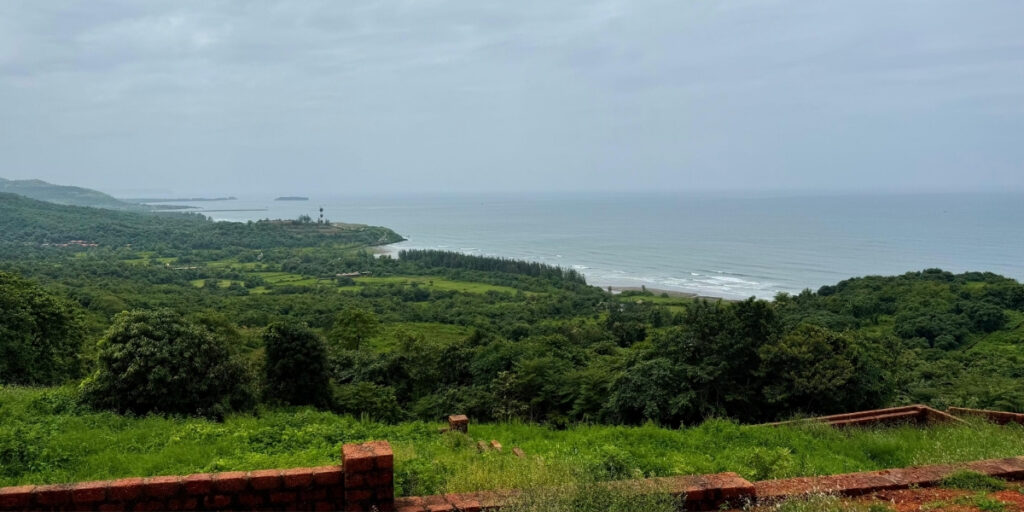
Vastu also pays close attention to natural land slope, and this happens to align well with practical coastal drainage needs. A plot that gently slopes from south to north, or from east to west, is generally preferred, as it is believed to allow positive energy — and, just as importantly, rainwater — to flow away from the home rather than pooling near the foundation. This is especially relevant in Konkan’s heavy monsoon season, where proper natural drainage protects the structure’s longevity regardless of Vastu beliefs.
The most frequent mistake is buying a plot purely for its view without checking orientation, shape and slope together. Another common oversight is ignoring the position of the approach road relative to the main door, since road direction significantly influences which entrance placement is practical. Buyers sometimes also assume every sea-facing plot needs an identical layout, when in fact the specific compass direction of the water — north, west or south-west — changes the recommended room placement considerably.
At Seaclusion, our NA plots in Anjarle are laid out as well-defined, regular-shaped parcels with clear boundaries and planned internal roads — the exact starting point Vastu consultants recommend before any construction design begins. Many of our plots offer a natural gentle gradient toward the coastline, supporting both traditional Vastu preferences and practical monsoon drainage.
Whether or not Vastu is central to your decision-making, buying a plot with a regular shape, clear title and sensible orientation is simply good practice for any coastal home — and it’s something our team factors into every layout at Seaclusion.
Explore Seaclusion’s rectangular, sea-facing NA plots in Anjarle — designed with sensible orientation and drainage in mind. Contact our team for a site visit.
Is it auspicious for the main door to face the sea directly?
Not always. Many Vastu practitioners recommend keeping the primary entrance on the north or east side of the home for favourable energy flow, while orienting living areas and windows toward the sea view. A local Vastu consultant can advise based on your plot’s exact compass direction.
Which direction is generally best for a sea-facing plot?
Plots where the sea lies to the north, north-east or west are commonly considered favourable in Vastu tradition, since water in these directions is associated with prosperity and positive energy flow.
Does Vastu apply to vacant land or only after a house is built?
Vastu principles are typically applied at two stages — first while evaluating a plot’s shape, direction and slope before purchase, and again during architectural design once construction begins.
Can an irregular-shaped coastal plot be corrected through Vastu remedies?
Some remedies exist, such as adjusting boundary walls or landscaping, but a naturally regular, rectangular plot is always the easier and more cost-effective starting point than correcting an irregular one.
Should I consult a Vastu expert before finalising a Konkan land purchase?
If Vastu compliance matters to you, it’s worthwhile to have a consultant review the plot’s orientation and shape before you sign the sale agreement, since some adjustments are far easier to plan for at the buying stage than after construction.
POST TAGS :

Discover NA Plots in Anjarle surrounded by lush greenery, peaceful skies, and the endless rhythm of the sea.
Copyright © 2025 Seaclusion